Questions fréquentesFrequently asked questionsVeelgestelde vragenHäufig gestellte Fragen
Tout savoir sur Smart4YooEverything about Smart4YooAlles over Smart4YooAlles über Smart4Yoo
Les questions qui reviennent le plus souvent sur l'éclairage solaire et connecté.The questions that come up most often about solar and connected lighting.De vragen die het vaakst terugkomen over zonne- en verbonden verlichting.Die Fragen, die am häufigsten zu Solar- und vernetzter Beleuchtung auftreten.
Qu'est-ce que Smart4Yoo ?What is Smart4Yoo?Wat is Smart4Yoo?Was ist Smart4Yoo?
Smart4Yoo est le pôle technologique de Win4LED dédié aux solutions d'éclairage intelligentes, autonomes et durables. Il regroupe 4 expertises complémentaires : l'éclairage solaire autonome, les luminaires certifiés, les mâts et poteaux composite et le smart lighting.Smart4Yoo is Win4LED's technological branch dedicated to smart, autonomous and sustainable lighting solutions. It brings together 4 complementary expertises: autonomous solar lighting, certified luminaires, composite poles and masts and smart lighting.Smart4Yoo is de technologische tak van Win4LED gewijd aan slimme, autonome en duurzame verlichtingsoplossingen. Het bundelt 4 complementaire expertises: autonome zonneverlichting, gecertificeerde armaturen, composietmasten en -palen en smart lighting.Smart4Yoo ist der Technologiezweig von Win4LED, der intelligenten, autonomen und nachhaltigen Beleuchtungslösungen gewidmet ist. Er vereint 4 ergänzende Expertisen: autonome Solarbeleuchtung, zertifizierte Leuchten, Verbundmasten und -pfähle und Smart Lighting. Comment fonctionne l'éclairage solaire autonome ?How does autonomous solar lighting work?Hoe werkt autonome zonneverlichting?Wie funktioniert die autonome Solarbeleuchtung?
L'éclairage solaire autonome combine un panneau photovoltaïque, une batterie de stockage et un luminaire LED haute performance. Le panneau capte l'énergie solaire en journée, la batterie la stocke, et le luminaire LED s'allume automatiquement à la tombée de la nuit. Aucun raccordement au réseau électrique n'est nécessaire — idéal pour les zones isolées, l'éclairage public, les sites industriels et les zones rurales.Autonomous solar lighting combines a photovoltaic panel, a storage battery and a high-performance LED luminaire. The panel captures solar energy during the day, the battery stores it, and the LED luminaire turns on automatically at nightfall. No connection to the electrical grid is needed — ideal for isolated areas, public lighting, industrial sites and rural areas.Autonome zonneverlichting combineert een fotovoltaïsch paneel, een opslagbatterij en een hoogperformante LED-armatuur. Het paneel vangt overdag zonne-energie op, de batterij slaat deze op en de LED-armatuur schakelt automatisch in bij het invallen van de nacht. Geen aansluiting op het elektriciteitsnet vereist — ideaal voor geïsoleerde gebieden, openbare verlichting, industriële sites en landelijke gebieden.Die autonome Solarbeleuchtung kombiniert ein Photovoltaikpanel, eine Speicherbatterie und eine leistungsstarke LED-Leuchte. Das Panel fängt tagsüber Sonnenenergie ein, die Batterie speichert sie, und die LED-Leuchte schaltet sich bei Einbruch der Dunkelheit automatisch ein. Kein Anschluss an das Stromnetz erforderlich — ideal für isolierte Gebiete, öffentliche Beleuchtung, Industriestandorte und ländliche Gebiete.
Quelles certifications proposent les luminaires Smart4Yoo ?Which certifications do Smart4Yoo luminaires comply with?Aan welke certificeringen voldoen de Smart4Yoo armaturen?Welche Zertifizierungen bieten die Smart4Yoo-Leuchten?
Nos luminaires Smart4Yoo respectent les principales certifications européennes et belges : marquage CE, ENEC/ENEC+ (sécurité électrique), ATEX (zones à risque), ORES (réseau wallon), Synergrid (smart grids), Zhaga-D4i (interopérabilité), Dark Sky (limitation pollution lumineuse) et Recupel (reprise et recyclage). Voir le détail de nos normes et certifications.Our Smart4Yoo luminaires comply with the main European and Belgian certifications: CE marking, ENEC/ENEC+ (electrical safety), ATEX (hazardous areas), ORES (Walloon network), Synergrid (smart grids), Zhaga-D4i (interoperability), Dark Sky (light pollution limitation) and Recupel (take-back and recycling). See all our standards and certifications.Onze Smart4Yoo armaturen voldoen aan de belangrijkste Europese en Belgische certificeringen: CE-markering, ENEC/ENEC+ (elektrische veiligheid), ATEX (gevaarlijke zones), ORES (Waals net), Synergrid (smart grids), Zhaga-D4i (interoperabiliteit), Dark Sky (beperking lichtvervuiling) en Recupel (terugname en recyclage). Zie al onze normen en certificeringen.Unsere Smart4Yoo-Leuchten erfüllen die wichtigsten europäischen und belgischen Zertifizierungen: CE-Kennzeichnung, ENEC/ENEC+ (elektrische Sicherheit), ATEX (gefährdete Bereiche), ORES (wallonisches Netz), Synergrid (Smart Grids), Zhaga-D4i (Interoperabilität), Dark Sky (Lichtverschmutzungsbegrenzung) und Recupel (Rücknahme und Recycling). Sehen Sie alle unsere Normen und Zertifizierungen. Pourquoi choisir des mâts en composite plutôt qu'en acier ou aluminium ?Why choose composite poles rather than steel or aluminium?Waarom composietmasten kiezen in plaats van staal of aluminium?Warum Verbundmasten statt Stahl oder Aluminium wählen?
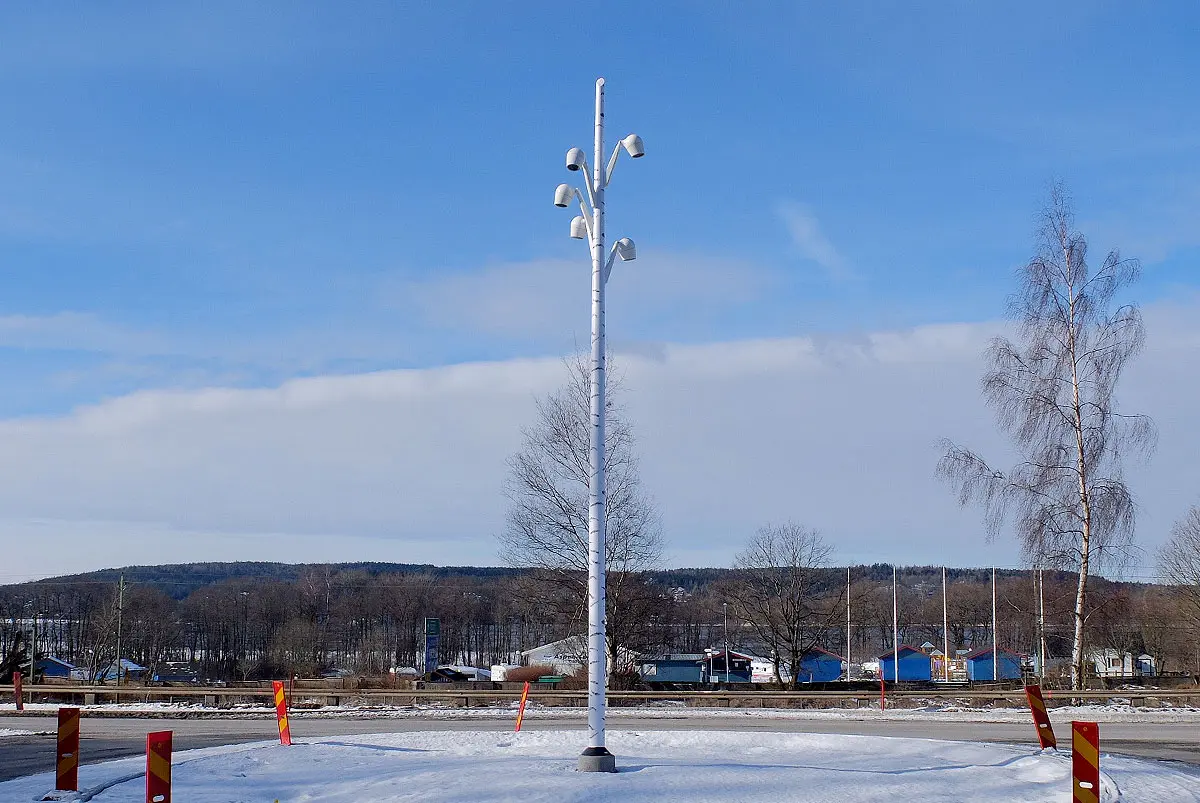
Les mâts en composite offrent plusieurs avantages clés : résistance totale à la corrosion (idéale en bord de mer, sites industriels, environnements salins), poids réduit (installation simplifiée, fondations légères), durabilité (durée de vie supérieure aux mâts métalliques), absence de conductivité électrique (sécurité accrue) et faible entretien. Ils sont parfaitement adaptés à l'éclairage public, sportif, urbain et industriel.Composite poles offer several key advantages: total corrosion resistance (ideal for coastal, industrial sites, saline environments), reduced weight (simplified installation, light foundations), durability (lifespan superior to metal poles), no electrical conductivity (increased safety) and low maintenance. They are perfectly suited to public, sports, urban and industrial lighting.Composietmasten bieden verschillende belangrijke voordelen: totale corrosiebestendigheid (ideaal aan zee, industriële sites, zilte omgevingen), gereduceerd gewicht (vereenvoudigde installatie, lichte funderingen), duurzaamheid (levensduur superieur aan metalen masten), geen elektrische geleidbaarheid (verhoogde veiligheid) en weinig onderhoud. Ze zijn perfect geschikt voor openbare, sport-, stedelijke en industriële verlichting.Verbundmasten bieten mehrere wichtige Vorteile: totale Korrosionsbeständigkeit (ideal an der Küste, Industriestandorten, salzhaltigen Umgebungen), reduziertes Gewicht (vereinfachte Installation, leichte Fundamente), Langlebigkeit (Lebensdauer überlegen gegenüber Metallmasten), keine elektrische Leitfähigkeit (erhöhte Sicherheit) und geringer Wartungsaufwand. Sie sind perfekt geeignet für öffentliche, Sport-, städtische und industrielle Beleuchtung.
Qu'est-ce que le smart lighting et quels protocoles utilisez-vous ?What is smart lighting and which protocols do you use?Wat is smart lighting en welke protocollen gebruikt u?Was ist Smart Lighting und welche Protokolle verwenden Sie?
Le smart lighting est la gestion intelligente de l'éclairage : détection de présence, gradation automatique, programmation horaire, pilotage à distance et optimisation énergétique. Nous utilisons les protocoles standards du marché — DALI (Digital Addressable Lighting Interface), Zhaga-D4i (interopérabilité), Casambi (Bluetooth Mesh sans passerelle) et Bluetooth Mesh. Le smart lighting permet jusqu'à 30% d'économies supplémentaires par rapport au LED simple.Smart lighting is the intelligent management of lighting: presence detection, automatic dimming, time scheduling, remote control and energy optimisation. We use industry-standard protocols — DALI (Digital Addressable Lighting Interface), Zhaga-D4i (interoperability), Casambi (gateway-free Bluetooth Mesh) and Bluetooth Mesh. Smart lighting can deliver up to 30% additional energy savings compared to standard LED lighting.Smart lighting is het slimme beheer van verlichting: aanwezigheidsdetectie, automatische dimming, tijdschema's, afstandsbediening en energieoptimalisatie. Wij gebruiken de marktstandaardprotocollen — DALI (Digital Addressable Lighting Interface), Zhaga-D4i (interoperabiliteit), Casambi (Bluetooth Mesh zonder gateway) en Bluetooth Mesh. Smart lighting kan tot 30% extra energiebesparing opleveren ten opzichte van standaard LED-verlichting.Smart Lighting ist das intelligente Beleuchtungsmanagement: Anwesenheitserkennung, automatisches Dimmen, Zeitplanung, Fernsteuerung und Energieoptimierung. Wir verwenden die marktüblichen Standardprotokolle — DALI (Digital Addressable Lighting Interface), Zhaga-D4i (Interoperabilität), Casambi (Bluetooth Mesh ohne Gateway) und Bluetooth Mesh. Smart Lighting ermöglicht bis zu 30% zusätzliche Einsparungen gegenüber Standard-LED.
Les solutions Smart4Yoo sont-elles compatibles avec d'autres marques de luminaires ?Are Smart4Yoo solutions compatible with other luminaire brands?Zijn Smart4Yoo oplossingen compatibel met andere armaturenmerken?Sind Smart4Yoo-Lösungen mit anderen Leuchtenmarken kompatibel?
Oui. Nos solutions Smart4Yoo reposent sur des protocoles ouverts et standardisés (DALI, Zhaga-D4i, Casambi, Bluetooth Mesh), garantissant l'interopérabilité avec les principaux fabricants européens de luminaires. Notre bureau d'études Win4Yoo vérifie systématiquement la compatibilité lors de la conception de chaque projet.Yes. Our Smart4Yoo solutions are based on open and standardised protocols (DALI, Zhaga-D4i, Casambi, Bluetooth Mesh), ensuring interoperability with major European luminaire manufacturers. Our Win4Yoo engineering office systematically verifies compatibility when designing each project.Ja. Onze Smart4Yoo oplossingen zijn gebaseerd op open en gestandaardiseerde protocollen (DALI, Zhaga-D4i, Casambi, Bluetooth Mesh), wat de interoperabiliteit met de belangrijkste Europese armatuurfabrikanten garandeert. Ons studiebureau Win4Yoo verifieert systematisch de compatibiliteit bij het ontwerp van elk project.Ja. Unsere Smart4Yoo-Lösungen basieren auf offenen und standardisierten Protokollen (DALI, Zhaga-D4i, Casambi, Bluetooth Mesh), die die Interoperabilität mit den wichtigsten europäischen Leuchtenherstellern gewährleisten. Unser Ingenieurbüro Win4Yoo überprüft systematisch die Kompatibilität bei der Konzeption jedes Projekts.